Crawlspace Encapsulation: What It Is, Why It Matters, and When You Need It
- Blake "Zane" Frazier

- Feb 8
- 3 min read
If your home is built on a pier-and-beam or raised foundation, the crawlspace beneath your house plays a much bigger role than most homeowners realize. Moisture, humidity, soil gases, and pests all originate in this area—and when left unmanaged, they can cause serious structural, health, and energy-efficiency problems.
Crawlspace encapsulation is one of the most effective long-term solutions for controlling these issues.
What Is Crawlspace Encapsulation?
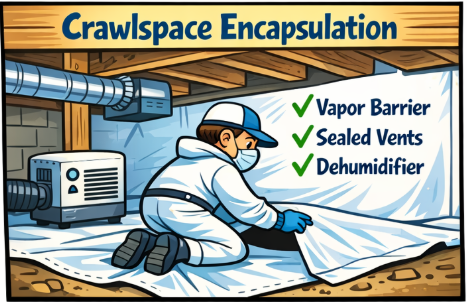
Crawlspace encapsulation is the process of sealing the crawlspace environment to isolate it from outside air, ground moisture, and humidity. Instead of allowing damp, unconditioned air to freely enter, the crawlspace is converted into a clean, controlled area.
A properly encapsulated crawlspace typically includes:
Heavy-duty vapor barrier installed over the soil
Vapor barrier sealed to walls and piers
Sealed vents and air gaps
Moisture and humidity control (often with a dehumidifier)
Optional insulation and air sealing
Proper drainage corrections, if needed
The goal is simple: stop moisture at the source.

Why Crawlspace Moisture Is a Serious Problem
Many homeowners assume crawlspace moisture is “normal,” especially in humid or clay-soil regions. In reality, excess moisture causes progressive damage over time.
Common problems from an unsealed crawlspace include:
Wood rot in beams, joists, and subflooring
Mold and mildew growth
Musty odors inside the home
Sagging floors and structural movement
Increased termite and pest activity
Poor indoor air quality
Higher heating and cooling costs
Up to 40–50% of the air inside your home can originate from the crawlspace. If that air is damp or moldy, it directly affects your living space.
What a Proper Crawlspace Encapsulation Involves
Encapsulation is not just “laying plastic on the ground.” A professional system follows a specific sequence.
1. Ground Vapor Barrier Installation
A thick polyethylene vapor barrier (often 6–12 mil or thicker) is installed across the entire crawlspace floor. Seams are overlapped and sealed, and the barrier is extended up foundation walls and around piers.
2. Sealing Walls, Piers, and Penetrations
The barrier is mechanically fastened and sealed to masonry, piers, and penetrations such as plumbing and wiring. This prevents vapor intrusion from soil and foundation surfaces.
3. Vent Sealing
Traditional crawlspace vents are sealed to stop humid outside air from entering. Venting often worsens moisture problems in warm, humid climates.
4. Moisture & Humidity Control
A crawlspace-rated dehumidifier or controlled air supply is installed to maintain safe humidity levels (typically below 60%).
5. Drainage (If Necessary)
If groundwater intrusion or standing water is present, interior drains or grading corrections may be required before encapsulation.
Benefits of Crawlspace Encapsulation
Encapsulation offers both immediate and long-term advantages:
Improved structural longevity
Reduced mold risk
Cleaner, healthier indoor air
Lower energy bills
Improved comfort and fewer odors
Increased home value
Reduced pest and termite activity
It also makes future inspections and repairs easier by providing a clean, dry work environment.
When Should You Consider Crawlspace Encapsulation?
Encapsulation is strongly recommended if you notice:
Standing water or damp soil under the home
Persistent musty smells
Visible mold on wood framing
Soft, sagging, or uneven floors
High indoor humidity
Termite or pest issues
Rusting ductwork or insulation falling down
Even homes without obvious symptoms can benefit if they are in high-humidity areas or have clay soil that holds moisture.
Encapsulation vs. Basic Vapor Barriers
A basic vapor barrier only covers the ground and is often left unsealed. While better than nothing, it does not control humidity or air infiltration.
Encapsulation is a complete system, not a partial fix. It addresses moisture, air movement, and long-term durability.
Is Crawlspace Encapsulation Worth It?
In most cases—especially in the South and Gulf regions—yes. While upfront costs are higher than minimal moisture fixes, encapsulation prevents expensive structural repairs down the road.
Homes with encapsulated crawlspaces typically experience:
Fewer foundation issues
Lower maintenance costs
Better resale appeal
Final Thoughts
Your crawlspace is the foundation of your home’s health. Ignoring moisture problems won’t make them go away. It only allows damage to worsen out of sight.
Crawlspace encapsulation is a proactive solution that protects your structure, improves indoor air quality, and creates a healthier home environment for years to come.
Give Duane a call at (318) 207-5974 for your free inspection!


Comments